
The Bison Rut is Here
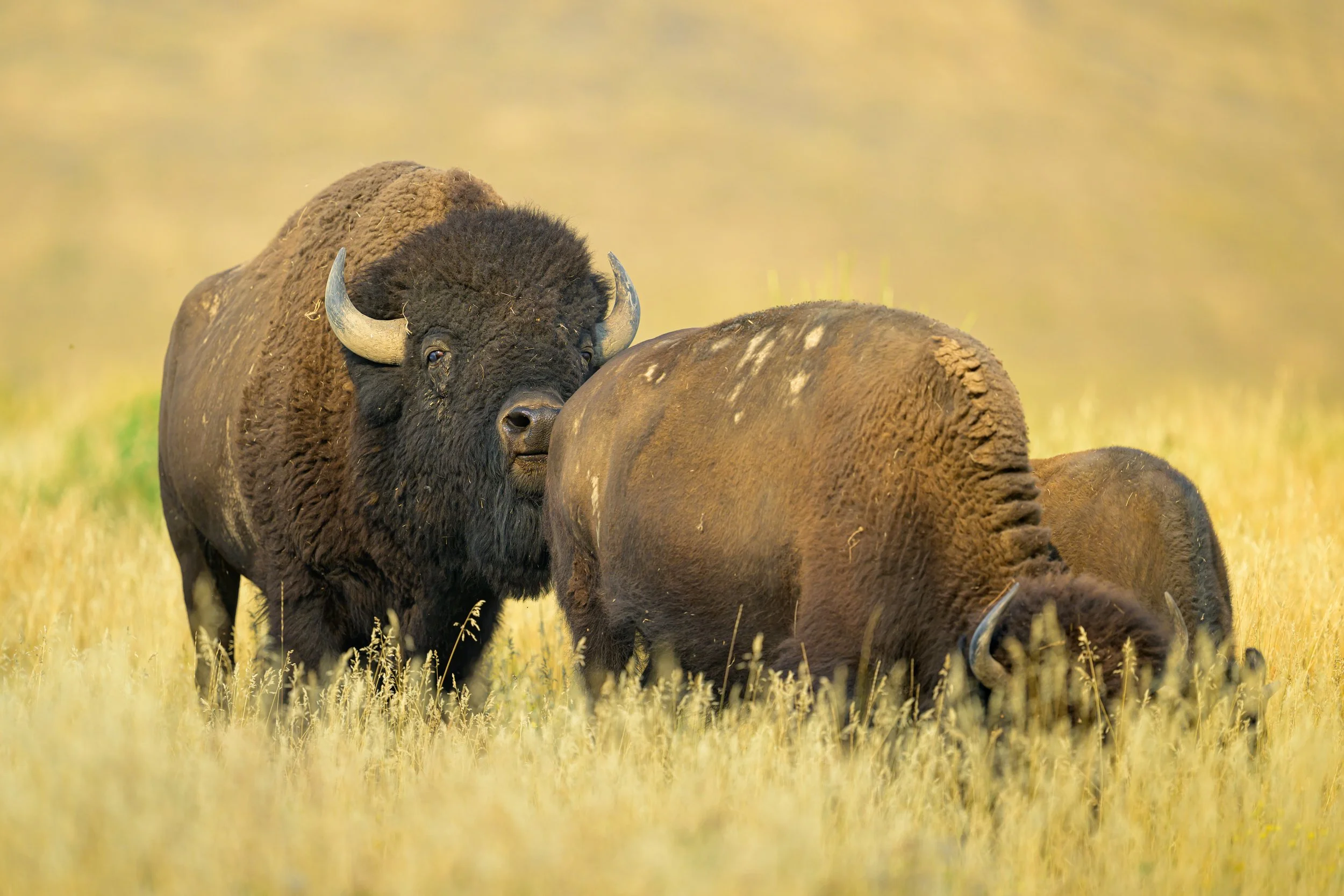
Right now, all across North America, from the Northwest Territories to Oklahoma, from Utah to Kentucky, the bison rut is in full swing.
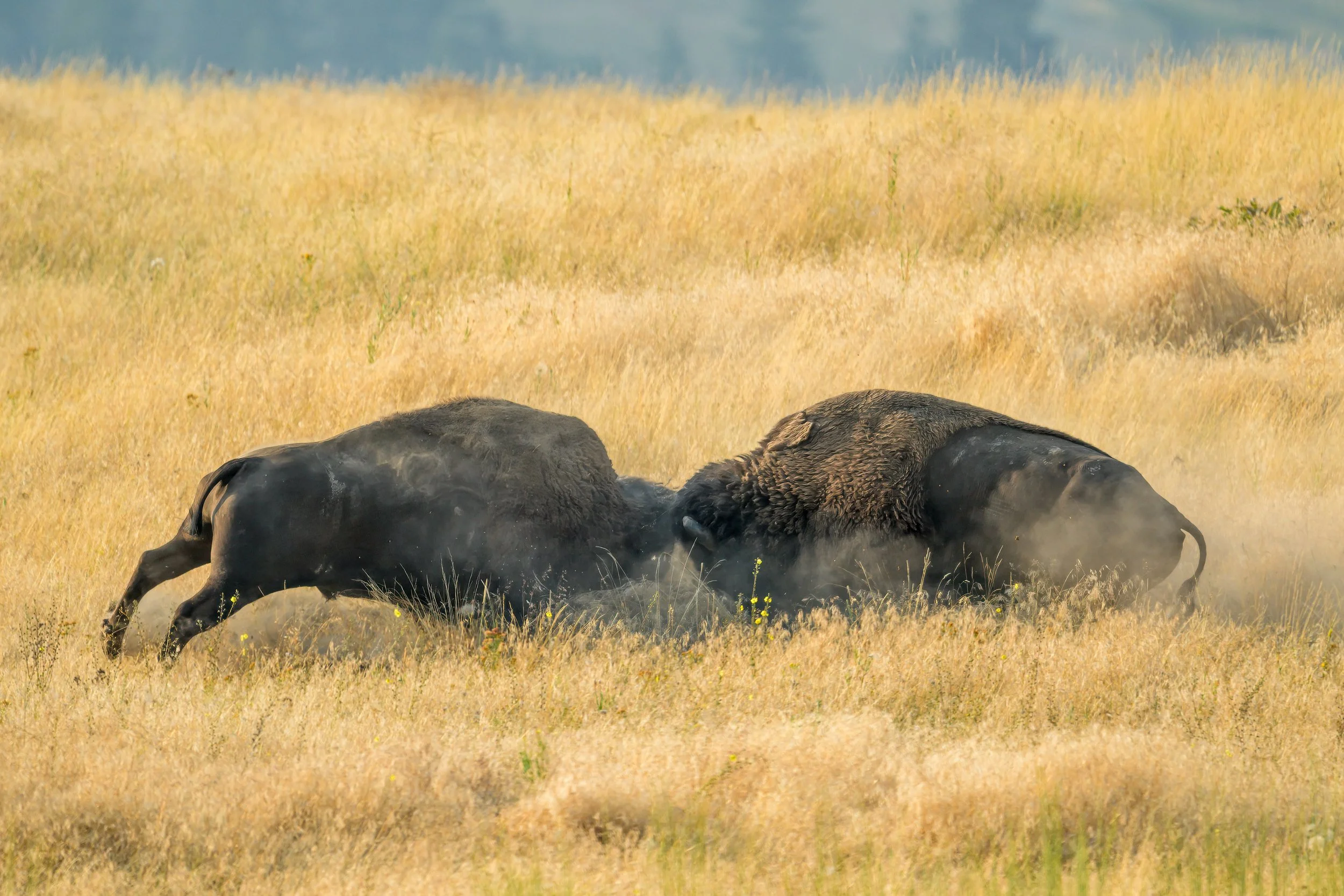
If you've never experienced this, let's just say the action can be downright heart-stopping at times, especially when you find yourself surrounded by a herd of a hundred animals, some weighing in at over 2,500 lbs and completely out of their minds. The deep, prehistoric bellows sound more T-rex than bovine. Great plumes of dust drift through the air like smoke. The electricity running through the herd is palpable. This is one of the best times of the year to be a wildlife photographer.
And as I write this, I'm camped out in Montana, where the prairie meets the mountains, for exactly that reason.
But the fact that the bison rut is happening all across North America right now from the edge of the Arctic Circle down to Texas, reveals something fascinating about these animals and their natural history, and something every wildlife photographer should understand.
For whatever reason, we have this collective assumption that the rut happens in the fall.
It doesn't.
The rut, that season of tournaments and battle, when males fight for the right to breed, begins in July and runs into February beginning with bison and ending with certain populations of white-tailed deer. Summer, fall, and winter. Some species, like bison, pronghorn, and muskox have all wrapped up the year's fighting and breeding before the fall equinox arrives.
The second misunderstanding is that timing shifts with latitude.
It doesn't.
Whether you're chasing wood bison in the Yukon or plains bison in Yellowstone, the timing is exactly the same: mid-July through mid-August.
To understand why, you need to grasp two things.
First: the rut has nothing to do with what's happening right now. It's all about what comes next. It's easy to get wrapped up in the brute force, the testosterone, the big horns and antlers of tournament species like moose, elk, or bison; but the whole point of the exercise is passing on your DNA to posterity. And the real limiting factor there isn't how many calves or fawns you sire — it's whether they survive. Fifty offspring means nothing if none of them make it. That's an evolutionary dead end.
So, for almost every species that fights for the right to breed, the entire year's calendar is built around one thing: lactation.
Lactation is the single hardest thing a female will do in the wild. The caloric demand is absurd. It takes enormous amounts of energy, nutrients, and minerals to produce the high-fat milk that grows a calf fast. Its not carrying the calf through winter. It’s not keeping them safe through summer. It’s lactation. And there's only one time of year the landscape can support that demand: green-up.
Green-up is a term as common out West as Dodge Ram and Chevy Silverado. Even if it's not something you spend three-quarters of the year thinking about, the word is self-explanatory. It's when the grass turns from brown to green. And it's that first flush of spring grass that gives a bison calf its best shot at survival, by way of its mother's milk.
Now, if you're using your critical thinking skills, you're probably wondering how latitude doesn't affect this. In Alaska, summer is short and most visitors would argue "summer" is a misnomer there. Oklahoma, meanwhile, is brutally hot. So how can the timing be identical?
Just like bison run on a phenological calendar, so does grass.
As a whole, grass isn't especially sensitive to temperature. There are cold-adapted northern grasses just as there are heat-adapted southern ones. What actually governs grass is water and day length (photoperiod).
Up north, winter is always just around the corner, but the midnight sun melts snow fast, delivers long hours of light for photosynthesis, and leaves plenty of water behind as runoff. Down south, photoperiod still matters, but water becomes the critical factor.
The result: green-up begins in late April to early May almost everywhere bison live and have ever lived. If green-up doesn't happen on that schedule, bison simply didn’t live there to begin with.
So, the meadows around muskegs and wetland complexes of Wood Buffalo National Park green up at about the same time as the Flint Hills of Kansas or Hayden Valley in Yellowstone.
That's what sets the calendar for the entire year. Take the average date of green-up, subtract the gestation length for whichever species depends on that grass, and you have the exact breeding window for that population, every year. Simple.
When I write about photographing the bison rut in Montana, that doesn't mean you need to book a flight to Yellowstone. I'm not even in Yellowstone. What it means is this: if there's an accessible bison herd near you, get there. Now!
This matters because one of the biggest reasons photographers miss opportunities like this is exactly these two assumptions: that the rut happens in the fall and that it shifts with latitude. Neither is true, and the animals won't wait for you to figure that out.
Not sure if you have bison near you? Let me make this easy for you. Check out the list below of places across North America where you can photograph these brutes and battles right now.
Want more bison rut info? Check out The Wildlife Photographer’s Guide to the Bison Rut that I published last year. It’s pretty exhaustive.
https://www.photowildmagazine.com/photographers-guide-to-the-bison-rut
North American Bison Rut Locations
This is not an exhaustive list. There are other places. But it does give you a good understanding of where opportunities are happening right now. Not all these locations are created equal for photography. But you can drive to every one of them, and you can photograph the rut that’s happening now.
East of the Mississippi
• Paynes Prairie Preserve State Park, Florida.
• Big Bone Lick State Historic Site, Kentucky.
• Elk & Bison Prairie at Land Between the Lakes, Kentucky / Tennessee.
• Blue Mounds State Park, Minnesota.
• Minneopa State Park, Minnesota.
• Kankakee Sands, Indiana.
• Dunn Ranch Prairie, Missouri.
West of the Mississippi
• Yellowstone National Park, Wyoming / Montana / Idaho.
• Grand Teton National Park, Wyoming.
• Theodore Roosevelt National Park, North Dakota.
• Custer State Park, South Dakota.
• Wind Cave National Park, South Dakota.
• Badlands National Park, South Dakota.
• Wichita Mountains Wildlife Refuge, Oklahoma.
• Caprock Canyons State Park, Texas.
• Fort Niobrara National Wildlife Refuge, Nebraska.
• Antelope Island State Park, Utah.
• Fort Robinson State Park, Nebraska.
• Bear River State Park, Wyoming.
• Rocky Mountain Arsenal National Wildlife Refuge, Colorado.
• Tallgrass Prairie National Preserve, Kansas.
• Joseph H. Williams Tallgrass Prairie Preserve, Oklahoma.
• American Prairie, Montana.
• Henry Mountains, Utah.
Canada
• Elk Island National Park, Alberta.
• Prince Albert National Park, Saskatchewan.
• Wood Buffalo National Park, Alberta / Northwest Territories.
• Banff National Park, Alberta.
• Grasslands National Park, Saskatchewan.
• Buffalo Pound Provincial Park, Saskatchewan.
• Camp Wainwright, Alberta.